
The palatine tonsils sit at the back of the throat, while adenoids reside behind the nasal cavity. While they form part of early childhood immunity, they are not essential organs. When they become chronicaly infected (tonsillitis) or excessively enlarged, they cause obstruction to breathing and swallowing.
Dr. Sajid treats tonsil and adenoid conditions in both children and adults, adhering to internationally validated surgical guidelines so operations are recommended only when genuinely beneficial.
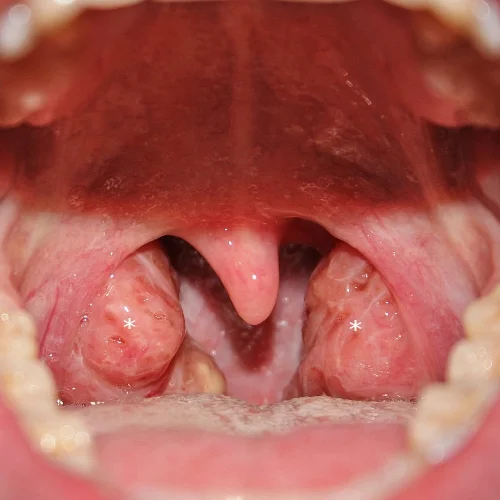
Diagnosis begins with a thorough throat and neck examination. In children presenting with snoring or nasal speech, a quick, gentle nasal endoscopy visualizes adenoid size. Dr. Sajid evaluates the frequency of infections against standard criteria and assesses signs of sleep-disordered breathing.
Tonsillectomy is recommended when infection frequency reaches 7 episodes in 1 year, 5 per year for 2 consecutive years, or 3 per year for 3 years, or when airway obstruction causes sleep apnea. In children, adenoidectomy is frequently performed concurrently. Modern dissection techniques ensure meticulous haemostasis and minimized postoperative discomfort. Performed through the mouth with no external skin cuts.
Complete blood count and coagulation screening. Review of personal or family bleeding history. Standard fasting guidelines.
20–40 minutes under general anaesthesia at the hospital. Gentle, precision dissection with immediate vessel sealing.
Throat soreness and mild ear ache (referred pain). Scheduled painkillers ensure consistent fluid and soft food intake.
Healing white slough forms on tonsil beds. Continued hydration and soft, non-spicy foods.
Return to school or work. Full mucosal recovery complete within 2 to 3 weeks.
Tonsillectomy cost depends on whether adenoidectomy is combined, patient age, hospital choice, and daycare or overnight stay. A complete, transparent estimate is provided at your initial consultation. Consultation fee: PKR 4000.
Ready to get it sorted? Book a consultation with Dr. Sajid Iqbal at Horizon Hospital, Johar Town, Lahore — call 0321 4496160 or WhatsApp.
No. Extensive medical studies confirm that tonsillectomy does not compromise immune function. In fact, children experience fewer total throat and respiratory infections after surgery.
Adults typically experience more throat soreness than young children for about 7–10 days. Adhering strictly to prescribed analgesics and staying well-hydrated makes recovery manageable.
Complete regrowth of tonsils is extremely rare following an extracapsular dissection.
Cool liquids, ice cream, yogurt, soft pasta, khichdi, and mashed foods are ideal for the first week. Avoid hot, spicy, or crunchy foods that could irritate healing tissue.
Adenoidectomy can be performed safely at any age when symptoms of airway obstruction, snoring, or glue ear justify it — most commonly between 3 and 7 years.
Same-week appointments at Horizon Hospital, Johar Town, Lahore.
Timings: Mon – Thu 9pm – 10pm
Consultation Fee: PKR 4000
Dr. Sajid Iqbal, MBBS, MS-ENT, is a consultant ENT surgeon with 20+ years of experience treating patients in Lahore. Read his profile →
Clinic in Johar Town, Lahore, Mon – Thu 9pm-10pm