
Ear infections affect different parts of the ear. Otitis externa (“swimmer’s ear”) is infection of the ear canal, common in Lahore’s humid summers and in people who use cotton buds. Acute otitis media is infection behind the eardrum, typical in children after colds. Chronic suppurative otitis media (CSOM) is a persistent infection with a hole in the eardrum and recurrent discharge — very common in Pakistan and a leading cause of preventable hearing loss.
Dr. Sajid treats all of these, from simple ear-canal infections to surgical repair of the eardrum and mastoid.
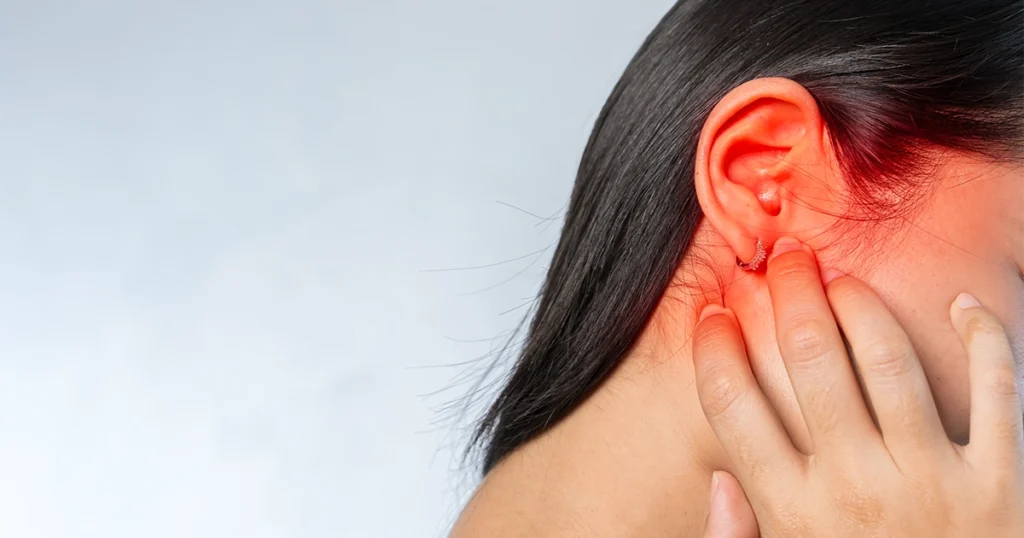
The ear is examined under a microscope, which allows gentle cleaning (microsuction) of wax, debris and discharge and a clear view of the eardrum. A hearing test and tympanometry check middle-ear function. Discharge may be swabbed for culture. For chronic disease or suspected cholesteatoma, a CT scan of the temporal bone is arranged.
Grommets (ventilation tubes) for children with recurrent acute infections or persistent glue ear affecting hearing. Myringotomy to drain a tense, painful middle ear. Tympanoplasty to repair a perforated eardrum — stops discharge, prevents infection and improves hearing; done through the ear canal or a small cut behind the ear, usually as a day-case. Mastoidectomy for cholesteatoma or infection that has spread into the mastoid bone.
Ear must be dry (no discharge) for the best graft success; this may take a few weeks of drops. Hearing test and CT as needed.
Tympanoplasty: 60–90 minutes under general anaesthesia. A graft of the patient's own tissue patches the eardrum. Grommets in children: 10–15 minutes.
Mild ache, a feeling of blockage, and a small dressing. Home the same or next day. Keep the ear strictly dry.
Packing dissolves or is removed in clinic. Hearing improves as the ear heals. No flying or swimming until cleared.
Hearing test to confirm the result. Graft success rates for tympanoplasty are typically 85–95%.
Costs range from clinic microsuction and drops to eardrum repair or mastoid surgery. Every procedure is quoted in writing after examination. Consultation fee: PKR 4000.
Ready to get it sorted? Book a consultation with Dr. Sajid Iqbal at Horizon Hospital, Johar Town, Lahore — call 0321 4496160 or WhatsApp.
No. They push wax deeper, scratch the canal, and are a leading cause of ear-canal infections and even eardrum injury. The ear cleans itself; if wax builds up, have it removed by microsuction.
Small perforations from an acute infection or injury often heal within 6–8 weeks if the ear is kept dry and infection-free. Perforations that persist beyond 3 months, or keep discharging, need surgical repair.
Recurrent infections are usually driven by enlarged adenoids, allergy or day-care exposure. After examination and a hearing test, options include treating the cause, a course of preventive measures, or grommets.
Persistent discharge means an ongoing infection that can damage hearing and, rarely, spread to the bone or brain. It should always be assessed — especially if it is smelly, blood-stained, or accompanied by pain behind the ear, dizziness or facial weakness.
Avoid flying with acute middle-ear infection or a blocked Eustachian tube; pressure changes cause severe pain and can rupture the eardrum. Ask before travel.
Same-week appointments at Horizon Hospital, Johar Town, Lahore.
Timings: Mon – Thu 9pm – 10pm
Consultation Fee: PKR 4000
Dr. Sajid Iqbal, MBBS, MS-ENT, is a consultant ENT surgeon with 20+ years of experience treating patients in Lahore. Read his profile →
Clinic in Johar Town, Lahore, Mon – Thu 9pm-10pm